
Call us now :07971191345
 Send Inquiry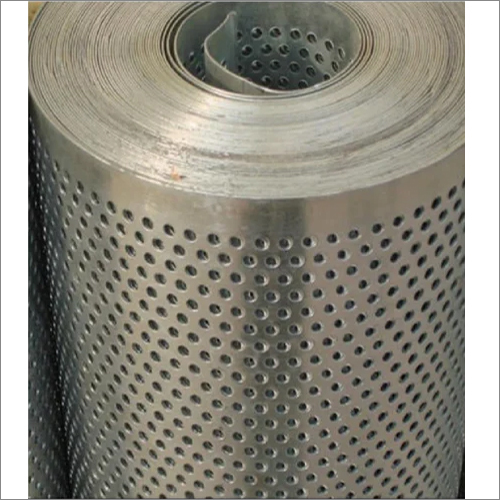
Pharma Perforated Coils
Product Details:
- Standard ASTM, AISI
- Surface Treatment Polished
- Grade SS304, SS316
- Shape Coil
- Process Perforation
- Temper Hard
- Usage Industrial
- Click to View more
X
Pharma Perforated Coils Price And Quantity
- 10 Piece
Pharma Perforated Coils Product Specifications
- Hard
- Pharmaceutical industry, Tablet coating machines, Capsule coating, Granulation processes
- 0.30 mm - 1.2 mm
- Industrial
- ASTM, AISI
- Hot Rolled
- Perforated Coils
- Metal
- High strength, Good durability, Rust resistance
- Perforation
- Coil
- SS304, SS316
- Polished
- Up to 1500 mm
- Deburred / Plain
- Customizable
- Round / Oblong / Custom
- As per customer requirement
- Mirror / Matt
- 10-40%
- Excellent for sterile environments
Pharma Perforated Coils Trade Information
- Cash Advance (CA)
- 100000 Piece Per Month
- 7 Days
- All India
Product Description
The best option for the cable management requirements of the pharmaceutical business is pharma perforated coils. These coils are made from premium stainless steel and come in a variety of thicknesses, ranging from 1 to 15 mm. The endurance and durability of this product are guaranteed by the hot-rolled production process, and their resistance to rust and corrosion is further increased by the galvanized surface treatment. The round hole design of the Pharma Perforated Coils makes them perfect for wire management in the pharmaceutical industry. Excellent ventilation is provided by this design, which keeps cables cool & guards against heat-related damage. These coils are adaptable & simple to alter to meet a variety of cable management requirements.
Specification
| Thickness | 1 to 15mm |
| Material | SS |
| Technique | Hot Rolled |
| Surface Treatment | Galvanized |
| Holes Type | Round |
| Usage/Application | Pharma Industry |
Superior Metal Quality and Durability
Pharma Perforated Coils are crafted using premium stainless steel, including SS304 and SS316 grades. This selection ensures high strength, exceptional durability, and strong resistance to rust, making them suitable for demanding pharmaceutical environments.
Optimized for Pharmaceutical Applications
With customizable perforation patterns and pitches, these coils are well-suited for processes such as tablet and capsule coating or granulation. The range of open area percentages (10-40%) allows precise air and material flow, critical for efficient pharmaceutical production.
Enhanced Finishing and Corrosion Resistance
The coils are available in both mirror and matt finishes to suit equipment needs. Specially deburred or plain edges enhance safety during handling. Advanced surface treatments ensure excellent corrosion resistance, maintaining product integrity in sterile conditions.
FAQ's of Pharma Perforated Coils:
Q: How are pharma perforated coils produced for use in the pharmaceutical industry?
A: Pharma perforated coils are manufactured through the precise perforation of high-grade stainless steel coils (SS304, SS316), using hot-rolled techniques. The process involves customizing hole patterns, open area, pitch, and edge finishing to suit customer requirements while meeting stringent industry standards like ASTM and AISI.Q: What are the typical applications for these perforated coils in pharmaceutical operations?
A: These coils are commonly used in tablet and capsule coating machines, as well as in granulation processes. Their perforated design facilitates efficient air flow and material distribution, which is essential for optimal coating and processing of pharmaceutical products.Q: When should I opt for a mirror or matt finish on pharmaceutical perforated coils?
A: Choose a mirror finish for environments that require enhanced cleanliness and easy surface cleaning, as it helps in maintaining sterile conditions. Matt finishes are preferred when glare reduction and surface texture are important for manufacturing processes.Q: Where are these pharma perforated coils typically installed or integrated?
A: Pharma perforated coils are installed within industrial pharmaceutical machinery, such as coating systems, granulators, and process equipment where precise airflow and material handling are critical. They are incorporated as essential components for filtration, drying, and coating applications.Q: What are the benefits of customizing the hole pattern and open area in these coils?
A: Customizing the hole pattern and open area allows for optimization of airflow, powder or liquid distribution, and processing efficiency. It also ensures that the perforated coil aligns exactly with a facility's production needs, improving both product quality and process control.Q: How does the corrosion resistance feature support pharmaceutical operations?
A: Excellent corrosion resistance is crucial in pharmaceutical environments to prevent contamination, maintain product purity, and prolong equipment lifespan. These coils withstand cleaning agents and exposure to moisture, making them ideal for sterile settings.Tell us about your requirement

Price:
Quantity
Select Unit
- 50
- 100
- 200
- 250
- 500
- 1000+
Additional detail
Mobile number
Email

Other Products in 'Perforated Coils' category


 Send Inquiry
Our Products

Gali No.- C/2, Sagar Estate, Dhumal Nagar, Vasai (E), Behind Rashmi Banglow, Vasai - 401208, Maharashtra, India

Mr. Ashok L. Sharma
(Proprietor )
Mobile :07971191345
 Send Inquiry
 Send SMS
Developed and Managed by Infocom Network Private Limited.
